
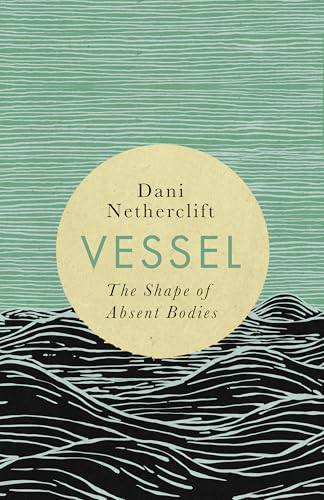
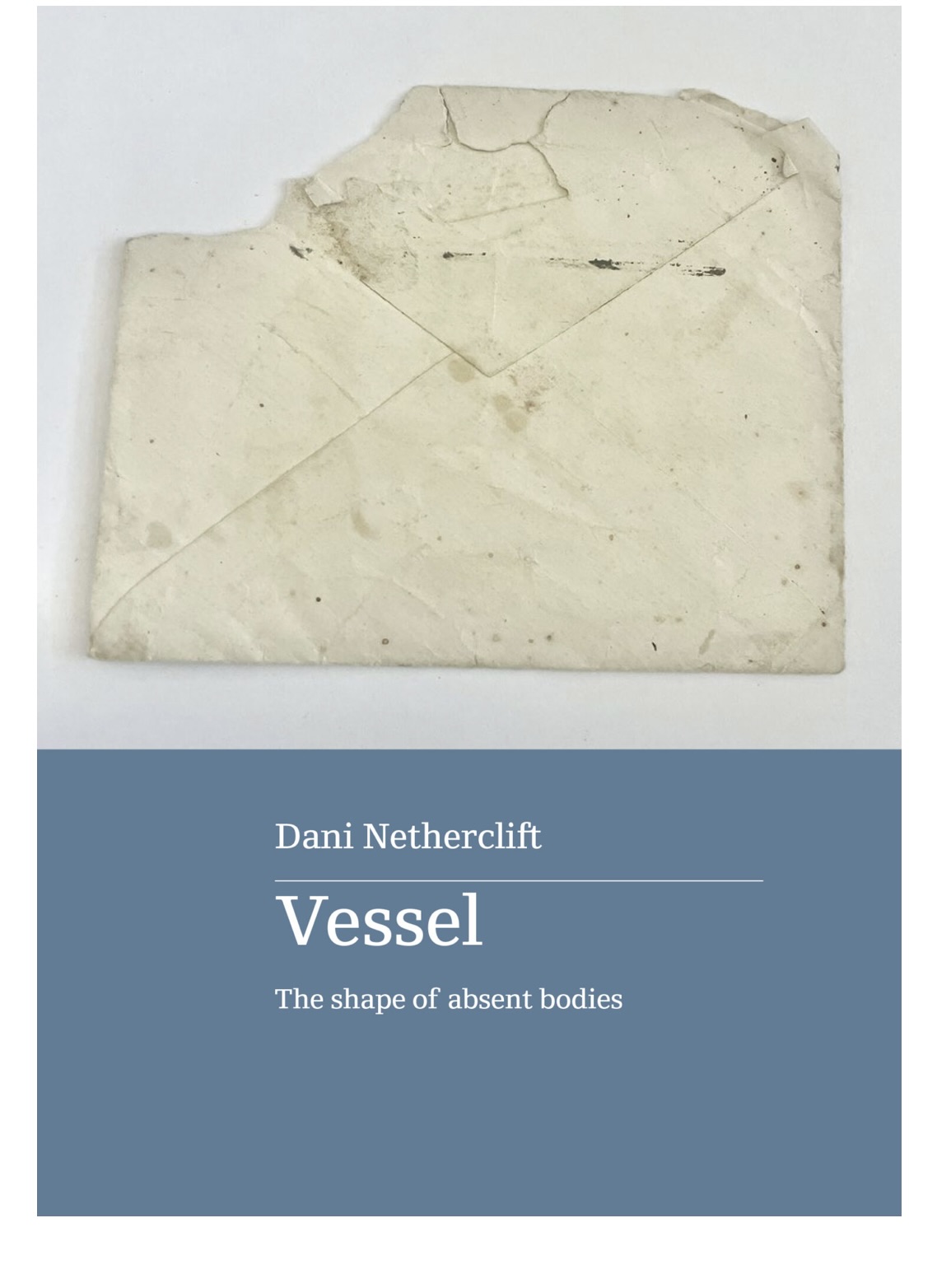
About Vessel: The Shape of Absent Bodies:
Who would think to call Ophelia a corpse? She is but a woman emptied of herself.
In 1993, when she was 18 years old, Dani Netherclift witnessed the drowning deaths of her father and brother in an irrigation channel in North-East Victoria. Or, she saw her father and brother disappear beneath an opaque surface and never saw these loved ones again. But also, never stopped imagining the shape of this bodily loss. Not viewing the bodies grows into a form of ambiguous loss that makes the world dangerous, making people seem liable to suddenly vanishing.
What would it have been like to have seen them, after the fact? To have looked upon their bodies. To picture the emptied vessels of her father and brother is to reach toward a sense of closure; a form of magical thinking in which goodbye is made possible. Vessel pulls together a language of space and ruin, interleaving stories of what it means to lose the physical body of a person you love with a bricolage of literature, history and (vessel) translations, and the realisation that all bodies become in the end bodies of text, beautifully written palimpsests—elegies—inked on the skins of the dead.
Released November 3, 2024 in Australia. Available in all good bookstores, or you can order from Upswell here
Vessel is out now in Canada and North America, published by Assembly Press. You can buy it here.
Endorsements for Vessel
“Beautiful, and terribly moving. She approaches unbearable loss with a delicate step, and walks right to its core, paying it the deepest possible respect.”—Helen Garner
“Vessel is a powerful current of words, an unmooring exploration of mortality. In its flow it carries lost bodies, fragments of conversation, snippets of philosophy and history. I am grateful for this singular book, its hunger and eloquence.”—Martha Baillie
“In a world increasingly indifferent to—or suspicious of—literature, I am supremely grateful for works like Vessel: short, intense, deeply intelligent, and profoundly moving. Dani Netherclift’s account of loss, and the long process of engaging with that loss, is always compelling. Netherclift has crafted an ‘elegiac lyric essay’ that is both in touch with its antecedents and unlike anything I have ever read. I am left grateful for her artistry and generosity.”—David McCooey
“Vessel interleaves a delicate curation of memory’s traces and fragments with poetries of forgetting and remembering. Netherclift is a writer of exceptional lyrical gifts and a brilliant anatomist of memory, even when facing loss and trauma. Vessel weighs what might be held in language with what is fleeting and porous in restive, inventive and deeply moving ways.”—Felicity Plunkett
“Utterly captivating and written with searing intelligence, Dani Netherclift’s Vessel is a poetic, tender and moving meditation on grief, time, memory and love and the shapes we leave behind.”—Ariane Beeston
"At the end of her searching narrative, Netherclift says, “This is no act of prosopopoeia. There is only quiet.” The dead are silent. She does not give them words.
A blurb on the back cover says Vessel: The Shape of Absent Bodies is “a powerful current of words, an unmooring.” Another says, it is “Beautiful, and terribly moving.”
I echo these words."—Kathryn MacDonald, TEMZ Review, Canada
“...there is a stillness to it: a serenity or acceptance that is underwritten by the meditative, lyrical quality of the work.”—Lianda Burrows, JASAL Journal
“Vessel is a thought-provoking, poetic elegy on loss and grief and a memoir of the powerful connection to family, even to those who are now gone.”—Winnipeg Free Press
“Lyrical and allusive, Vessel is a memoir about a personal tragedy and a moving meditation on what remains of the dead.”—starred review, Foreword Reviews
“Vessel is a quiet, powerful meditation on mourning, embodiment, and the fragile human need to say goodbye… The writing returns again and again to the spaces where certainty dissolves, where memory fills what cannot be seen.”—Open Book
“Revisiting the nature of life and death in tidal cycles, Dani Netherclift provides the reader with a thoughtful, elegiac meditation on a family tragedy.”—The Seaboard Review of Books
“This is a book for poets, for those struggling with loss, or for those interested in the meditation on bodies, space and water and the intersection of words and memory, bodies and death, form and content.”—Cass Moriarty
“In interleaving her own family’s narrative with the writing of others, Vessel transcends personal elegy, and becomes something more ambitious: writing as testament; as reclamation; as communion.”—Mascara Literary Review
The Paperback Salon Series
I'm thrilled to announce that Anna Johnston and I will be in conversation about Vessel at Bard's Apothecary on Tuesday, March 4.
When: Tuesday 4th March at 6pm
Where: downstairs @ Bard's Apothecary, 7/24 Crossley Street, Melbourne
RSVP to paperbackbookshop.events@gmail.com
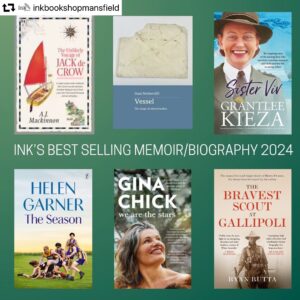
Vessel on Ink Bookshop 2024 Nonfiction Bestsellers List
Christmas Book Signing Event
On Saturday December 14, I will be In Gardenvale with these three other writers, selling and signing books. We'll be there from 1-4PM, with champagne and other refreshments. I'd love to see you there, and sign a book or 2 for you. The event is free but please RSVP if you can, so we can cater accordingly.

Book Review by Mike Smith

Book Launch News
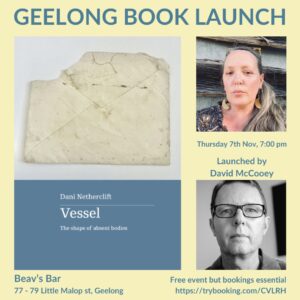
My book, Vessel is not far away! The first launch event will take place in Geelong, At Beav's Bar, 77-79 Little Malop St, walking distance from Geelong Station. Geelong is a pleasant 1 hours train trip from Southern Cross Station in Melbourne. The event will be supported by Geelong's The Book Bird book shop. Event is free but please do book a ticket! Details of another event at Ink Bookshop in Mansfield on November 9 to follow.
AAWP/ Westerly Life Writing Prize 2024
My lyric essay' Our Unmoored Selves' was highly commended/honourably mentioned in the 2024 AAWP/Westerly Life Writing Prize. This essay is about how words on a page can connect and reconnect us even in 'lost' spaces of time (selves in extremity, in this case, anesthesia, and after death).
Judges comments:
This is a deceptively intricate piece, which builds from a seemingly innocuous opening to come to confront a series of traumatic experiences in a powerful way. Most impressive in this work is the manner in which the representation of trauma is both extended emotionally, offered to the reader, and at other points held and contemplated at something of a distance – there is a consciousness here of the untranslatable, and of the limits of linguistic expression. The writing offers nuanced references to a variety of sources that come together into a complex subtextual engagement with the lived reality, framed through the notion of the twilight cognitive state of anaesthesia. This is sophisticated and powerful both as an entry into lived experience and as a metaphor for the brain’s ability to grapple with extremity in both conscious and subconscious ways.
My gratitude goes to AAWP and to Westerly for offering this prize and for reading. Congratulation to the winner of the first prize, Rose Hunter, and to the other highly commended/honourably mentioned writer, Oliver Shaw.
The Portside Review Human Rights Essay Prize
My lyric essay 'Read as a boy' won second place in the Portside Review Human Rights Essay Prize. The piece details the correlations between reading a lyric essay and understanding my autistic son.
Judges comments:
John Ryan: Dani Netherclift uses the lyric form to thoughtfully question and represent the fragmentary way we understand the other, in this case her autistic son. Through a strategy of attentiveness and a sustained, elegantly rendered personal voice, the author offers us a teaching moment, and as she shares some of the moments in their life together, we recognise that what she has learned is the outcome of love. The essay is underpinned with respect for her son and as well, Netherclift places trust in the reader's ability to learn.
Frances An: The experimental and lyrical form of this essay matches its subject: the complex issue of dealing with a son's autism and the reactions it draws from others. The metafictive element is clever and woven well into the exploration of the son's atypical behaviour. The details such as the boy's calling out of typed phrases in TV shows are emotive. The affirmative ending highlights that despite superficial differences between autistic children's and neurotypical children's communication styles, everyone benefits from the unconditional regard of those who understand them.
Sampurna Chattarji: Dani Netherclift performs a delicate balancing act as she invites us to learn how to read a child (her autistic son) while reading her lyric essay. Both may prove rather more unsettling than we might like. Just as she must discover what comprises a ‘lyric essay’, might we discover what comprises a ‘self’ (unboxed and refusing its assigned dictionary definition)? As she deciphers and decodes, we accompany her on a ‘path of understanding’ how we can be more sensitive to language as a form of violence, and teach ourselves other ways of ‘reading’ the Other.
Many thanks to the lovely people at Portside Review and the judges. Sending a special shout out to Kirsten Han for her winning essay 'Singapore Will Always Be at War'. All 12 of the shortlisted essays will be published together in Portside Review on July 31. Meanwhile, you can read 'Read as a boy' for free.
The Local Word Prize 2023
'After my grandfather’s death, I attend a working bee to pack up the contents of the house that he and my grandmother built in 1978. I fill a cardboard box with willow-ware teacups and saucers, my grandmother’s carved wooden jewellery chest, a Victorian urn, an old chip-board clipboard, a yellow note pad, and a tall, narrow Telephone & Address Book, bound with black string which on closer inspection turns out to be a shoelace, tied into a bow.'
—From 'Telephone and Address Book'
In March 2023, my lyric essay, 'Telephone and Address Book' won Geelong Regional Libraries/Deakin University's inaugural The Local Word Prize, from a field of almost 600 entries of both fiction and nonfiction. The essay is an account of my late grandmother Veronica's distinctive address book that I inherited after the death of my grandfather. The address book is itself a tender and articulate form of life writing and elegy, and 'Telephone and Address Book' is a reading of that.
The Slow Canoe/AAWP Creative nonfiction Prize 2020
‘The trees on this bone are indigo. The willows bend and weep.’
—From Incomplete Archive of Blue.
Judges comments for Incomplete Archive of Blue, winner of the 2020 AAWP/The Slow Canoe Creative Nonfiction Prize:
—It is a beautiful fragmentary catalogue of memories — an ‘incomplete archive’ as the title suggests — of a period of time in the writer’s past, when she lived near the sea with her partner.
From out of all the varied, affecting, hard and heartening non-fiction entries we received this year, which took us into such a range of different lives and experiences and views, we were first surprised and then whole-hearted to find ourselves in agreement that the prize should go to this domestic story. ‘Incomplete Archive of Blue’ mixes strikingly good nature writing with the deft capturing of particular and tender (and difficult) human interactions as they appear when seen through the distance of time. Formally, it is fascinating and alive, landing somewhere between an essay and a prose poem. Lydia Davis described fragmentary writing as feeling closer to the origins of writing, ‘the closest mirroring of the writer’s emotion’, which is precisely how this piece reads — even while you are aware of the skill and work that has gone into creating that sense. In its focus on a small window of ordinary life, it provides exquisite insights into large and small questions of existence and it left us with several lasting images that we have returned to again and again.
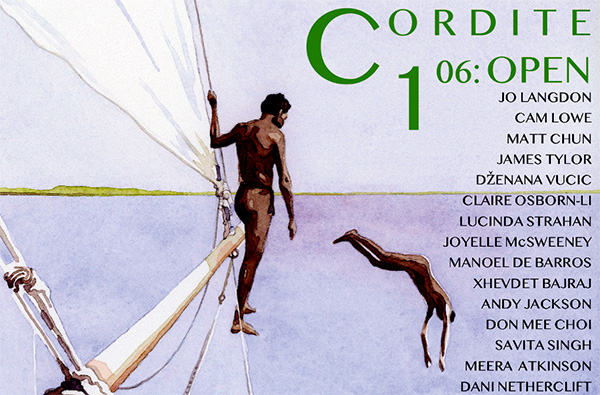
"At the end of her searching narrative, Netherclift says, “This is no act of prosopopoeia. There is only quiet.” The dead are silent. She does not give them words.
A blurb on the back cover says Vessel: The Shape of Absent Bodies is “a powerful current of words, an unmooring.” Another says, it is “Beautiful, and terribly moving.”
I echo these words."—Kathryn MacDonald, TEMZ Review